Failure Is Necessary:
In a busy emergency infrastructure, we’re commonly overwhelmed. Professionals acclimate to such rigors as sleep deprivation, understaffing, overworking, and operating in dangerous environments. Those outside of Emergency Response cannot imagine how effective and reliable patient care occurs under such pressures, yet the pros possess uncanny skill and affection for the adventure. The secret: train to make decisions rapidly and course corrections under extreme duress. It’s not learned overnight or over a year. It’s a never-ending practice of presiding over one’s imperfections.
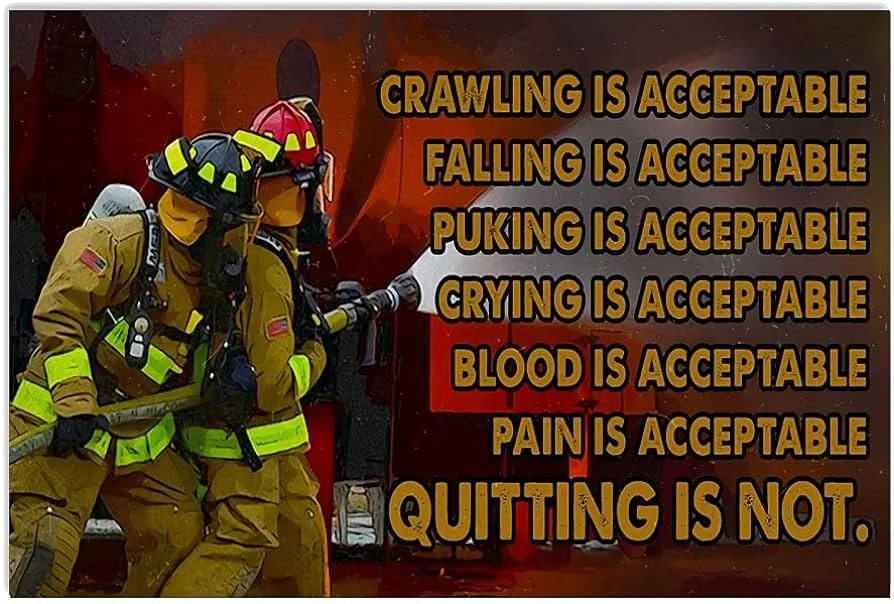
Early on, my students learn the tenets of trial and error. When you fall, I encourage you to get up. When mistakes are made, quickly fix them, and don’t repeat them. One rule is paramount: Don’t take failure as defeat.

The Burden of the Trophy Generation
The children plead: “It’s not our fault, our parents didn’t allow us to fail.” Parents say: “We meant well.” For whatever reason, there is a hardwired taboo in modern culture to be incorrect. We make concessions and allowances, often passing the buck. It’s not ideal or admirable, but it often goes unchallenged. Except, when life is on the line, there needs to be accountability and a plan for improvement, with the leniency and ability to allow someone to improve without irreparable penalty. It’s the only way the younger generations will learn the difference between being incorrect, off-track, correctable, or criminal. This must be taught early on in school and reinforced throughout their education.
In my courses, students need to dare to improvise, make dire decisions quickly, and trust that there’s freedom to be incorrect. The first mistakes are always the hardest for students, and they should be handled accordingly. No one expects students to know lifesaving care right off the bat. Even so, the delicacy makes each student a case-by-case situation that deserves unique critique.
Maybe that’s the necessary pain that has to be felt in order to dedicate more. Maybe that is the test to see who truly wants to be here. Losing doesn’t get any easier, especially in Emergency Response. SO maybe we all die just a little here, and then grow from it…grow out of it. Most of them do, and it’s beautiful to watch.
I’ve built safety nets for mistakes up front. I joke with them about it, and repeat the sentiment over the semester. "‘Start killing left and right, slaughter this one, break this one’s neck, overlook that patient’s heart attack. Who cares? There’s no harm in forgetting the arm in a practice scenario. Let’s learn how to become comfortable in discomfort, sharpen our skills now, and leave the harmful practices in the classroom.’
Try, Try Again
At its base, there’s you and the mountain. Above is the peak; below is everyone else. Shale, landslides, cliffs, and cougars lay ahead. Sometimes, it’s a team event, but on the proving- ground, the foothold is wide enough for only one person. I tell them to walk that path often; get used to the feeling. Inevitably, beginners are going to fall on their academic asses more than once. The point is to learn from the falls. Lessons are best learned when the best when hard-won. As the saying goes: “If at first you don’t succeed…try, try again.” Notice ‘try’ is emphasized twice?
I intend you to stumble in my classes. You learn to navigate the darkness by stubbing toes and concussing egos. If you don’t give up, improvement is inevitable. Learn the room layout by stepping, falling, standing up, and pushing forward another step. One day, in a fire, while in a house fire, crawling through the impenetrable black heat, you’ll instinctively navigate through a labyrinth of overturned furniture, crawl under the heaped roof timbers, find a crying toddler cowering on the other side, and rescue her. When suddenly, the grand design of the world shows you why all the failures of your past needed to occur so that you could save this child’s life, you can thank me then.
But seriously, making sensible gut decisions when failure is a possibility is an essential skill for this job.* You have to learn how to think rationally when stressed, which begins through trial and error.
Richard Kolomay & Robert Hoff Firefighter Rescue and Survival, Fire Engineering Books, 2003, Ch. 1, 3-5

Bully The Tough Guy
In our society, everyone loves “The Fool” because every professional—every hero—began as a fool. In my courses, there’s always one fool who can be cajoled early and often:…me. Since I put so much importance on learning to make mistakes, I should be the first one to break through the icy scrim of ego, cop to my shortcomings, and humbly course-correct when necessary. I’ve bumbled my way through most of life, and probably will keep on keeping on that way. I’ve learned to use it to my advantage. It demonstrates humility, critical thinking, and honesty.
If I’m wrong, I announce it to the class. If I don’t know the right answer, I look it up and report it to the class after break. I always respected teachers, officers, and supervisors who did that, and I believe that respectable educators should lead by example. How else will the student learn how to admit to mistakes if they don’t witness their teacher screw up, then own up, and finally shape up?
So, start with the presumably most bullet-proof individual in class, and let it ripple out. I watch the students who laugh and who share my sense of humor. With no goading, these students often share their own blundering mishaps with their cohort, adding riotous laughter to the fire. They get it; their confidence isn’t staked on mistakes. Organically, the learning environment becomes playful and forgiving and will allow the class to weather the semester’s occasional trying periods ahead.
The students who stick their necks out in discussion often volunteer for classroom skills practice and testing. When doing so, they not only demonstrate proper equipment and skill performance but also the proper mindset for instruction and critique. They show the class how to listen and revise techniques while being coached and assisted by instructors. They set the tone for the class, thus making them excellent candidates for Squad Leaders later in the semester and Lab Assistants after passing NREMT.
Ideally, the cohort cottons onto an impartial, curious willingness to experiment and improve through trial and error. This hopefully travels with students through schooling and careers, allowing them to quickly adapt to adverse working conditions, learning on the job, and staying disciplined while not completely self-combusting when they slip up. Rather, they have learned to quickly course correct. When others around them fall short, they extend a forgiving hand, and help that individual also correct his or her mistakes without overt punishment. Believe it, if they intend on working to save the sick, dying, and injured, conducting oneself in accordance with these tenets is not simply important; it’s essential.